
🛑 How to Build a Culture of Accountability That Feels Safe, Strong, and Unstoppable

If you’ve been following this Accountability in Action series, today we’re wrapping up our 5-part series, so give yourself a little applause — no really, I mean it. 👏🏼👏🏼👏🏼
You’ve walked through fear, clarity, ownership, responsibility, and now we’re landing this plane in the place every leader eventually faces: Culture.
Because here’s the truth, friend:
You don’t build accountable people…
You build the environment where accountability becomes the natural instinct of your team.
Think of it like this—I once visited a bird sanctuary where giant owls, parrots, and hawks shared this wide-open habitat. What struck me wasn’t the size of the place… it was how calm everything felt. The staff told me: “When the environment feels safe, birds naturally show their strongest instincts.”
Humans aren’t any different.
If the culture feels unsafe → people retreat. If the culture feels confusing → people freeze. And if the culture feels critical → people hide their mistakes. 😢 But when the culture feels safe, strong, and supported, accountability becomes the air your team breathes. That’s what this article is all about.
Before we dive in — if you haven’t yet joined my weekly newsletter, The Leader’s Lift, now’s your moment. It’s where I send deeper coaching, bonus frameworks, and insider leadership insights you won’t get on the blog.👉 Sign up here: velmaknowles.com/newsletter
You and your leadership muscles will thank me later. 🤣

Alright - lets’ dig in.
Why Accountability Culture Feels Hard (But Is Completely Fixable)
A 2025 MIT Sloan Culture report found that 80% of accountability breakdowns aren’t people problems… they’re environment problems.
Meaning… your people aren’t ignoring expectations. They’re not trying to avoid ownership. They’re not waking up thinking, “What can I not take responsibility for today?” (although it sure does feel like it sometimes, but stay with me.)
The real issue is this: Most workplaces don’t intentionally reinforce the habits that create accountability.
Stop carrying your team’s workload alone.
If your team treats deadlines like suggestions… it’s time for a wake-up call. 🚨 Let’s fix accountability so you can stop firefighting and start leading.
📞 Claim your leadership strategy session now -
👉 www.leaderspathway.com/contact
Cultures drift toward comfort unless the leader (that’s you) guides them intentionally toward clarity, consistency, and courage.
That’s why YOU matter so much. You’re the thermostat, my friend… the rest of the team sets their temperature based on yours.

How to Build a Safe, Strong, Unstoppable Accounability Culture
When some leaders hear ‘accountability culture,’ they picture: a military boot camp, or a clipboard-wielding hall monitor or worst, a supervisor whose eyebrows have never once relaxed.
None of that is what we’re building.
This is not fear-based order… and this is not performance policing. This is simply you saying: “Hey team - let’s agree on how we want to show up together so work feels good, not exhausting.”
Culture doesn’t need more pressure… culture needs more clarity.
Here are Three Anchors that create a culture where accountability feels natural - not scary.
Make Accountability a Shared Language - say this with me: “accountability is not punishment - it’s partnership.” If your team hears the word ‘accountability’ and their stomach drops… that’s a culture problem, not a people problem.
Create Predictable, Repeatable Rhythms - if your team doesn’t know what’s expected weekly, monthly, or quarterly… accountability becomes guesswork. Strong cultures run on rhythm. Predictability creates psychological safety, and psychological safety creates trust… and trust… trust is the fertile soil where accountability grows roots.
Model Accountability Before You Demand It - your behavior is the loudest voice in the room. If your team sees you… owning mistakes, keeping your word, setting boundaries, following through and communicating clearly… they will mimic it. Accountability is contagious - but only when leaders demonstrate it consistently. Remember the culture becomes whatever the leader repeats.
Final Word, for You
⏱️ When you’re ready to build a culture of accountability that feels safe, strong, and unstoppable - I’m here to help.
Let’s partner together to engage your teams and departments in the kind of accountability that works for them, supports their confidence, strengthens trust, and turns follow-through into a natural rhythm instead of a fear-based reaction.
Because when your people feel safe to own their work, your entire organization becomes unstoppable.
I’m cheering 📣 for you!
P.S. ➡️ Listen to the Podcast here
PS: For more strategies that actually work, grab Books 1 & 2 of The Valuable Leader series and turn dependency into ownership.
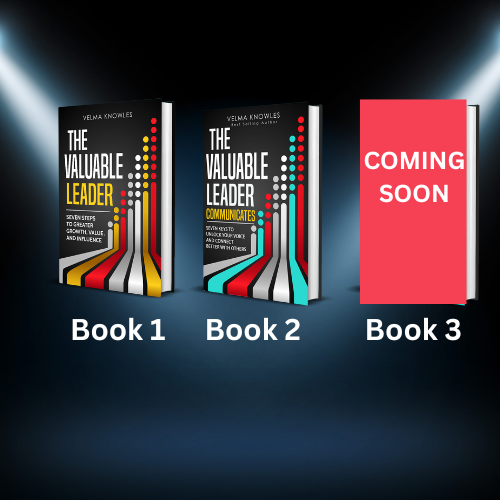
Book 1: The Valuable Leader: 7 Steps to Greater Growth, Value, and Influence – discover the framework to show up as a leader who inspires and drives results.
Book 2: The Valuable Leader Communicates: 7 Keys to Unlock Your Voice and Connect Better With Others – learn the communication strategies that separate bosses from leaders.